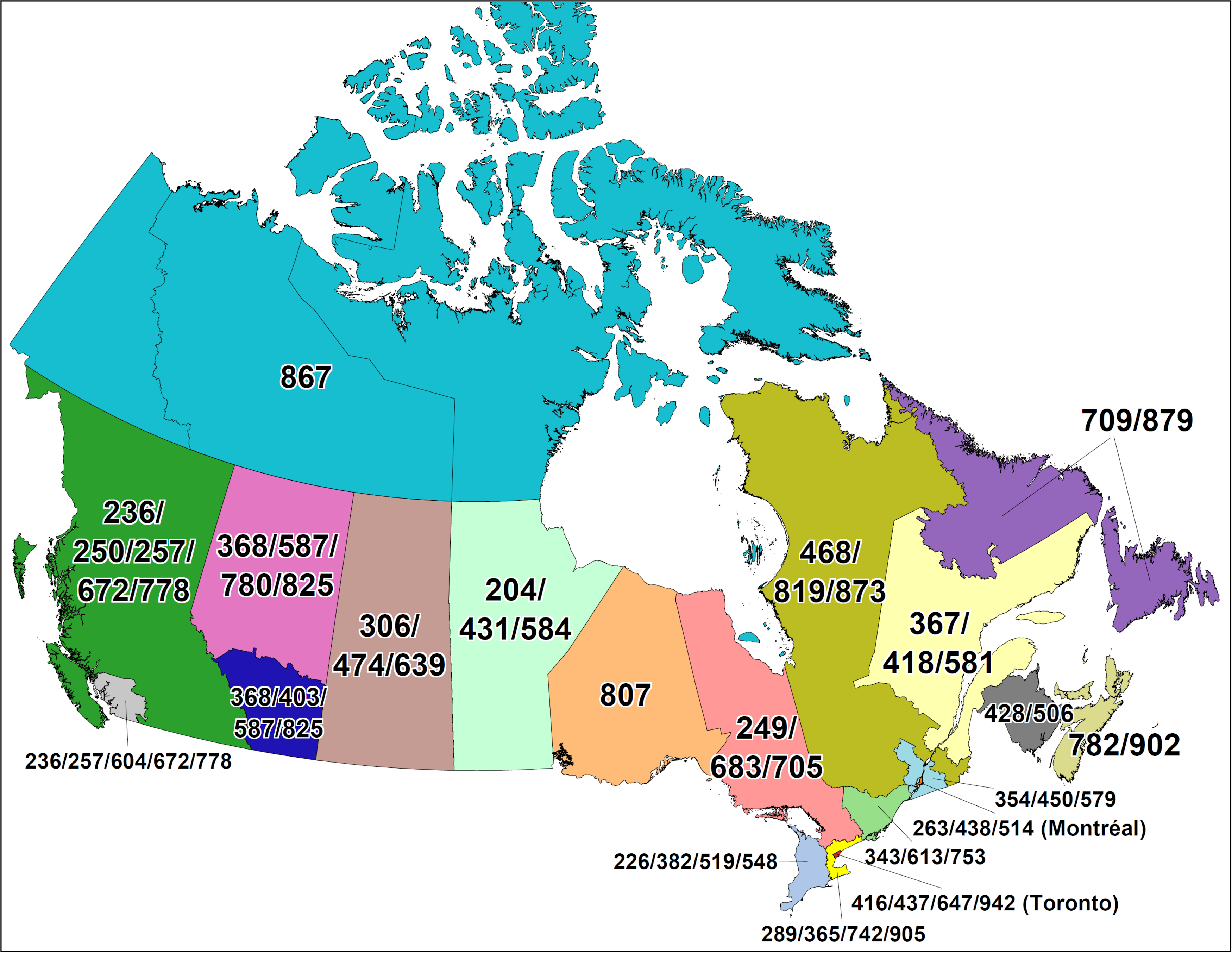
851 is approved for 2028, not active today
The CRTC’s July 2026 decision approves a distributed overlay using 851 in the 782/902 region, effective May 27, 2028. The subsequent official planning notice uses that same date. As of this article’s November 6, 2026 review, 851 is a future code.
The current national numbering map prints 851 alongside 782 and 902. That is a warning about how to read maps: an included label can represent an approved future overlay rather than current in-service numbers. Check the dated implementation notice before describing a code as available now.
A business updating a database can prepare for an announced code without claiming to own or supply a future number. Do not promise customers a specific 851 assignment, launch-day stock or automatic migration of their existing contact. Actual provider offers and allocation decisions are separate.
Build a contact record that distinguishes place and route
Imagine arranging one appointment in Halifax and another in Charlottetown. Put the full venue and province in each calendar entry, and agree the time for the actual location and date. The number’s prefix cannot establish where a travelling participant is currently answering.
Ordinary local calls use ten digits. A toll call uses the carrier’s applicable 1-plus-ten-digit procedure. Store +1 followed by the ten digits for an international contact record, while checking that the outgoing account actually supports and prices the Canadian destination.
If an old saved contact has only seven digits, verify the complete published number rather than selecting an area code from memory. If an automated system rejects 782, correct that system’s validation instead of changing the recipient’s prefix. An overlay does not supply alternative area codes for the same subscriber.
- 01
Resolve the venue
Record the town, province and complete address separately from the phone number.
- 02
Verify the full contact
Use the organisation’s current official listing or a trusted booking record.
- 03
Check the account and return route
Confirm the actual Canadian call allowance and provide a complete callback number.
Choose supported functions rather than a familiar prefix
For a new Canadian contact, ask about actual exchange availability, eligibility, renewal and recovery, then confirm voice and messaging support. A code’s existence does not establish retail stock, app verification acceptance or the physical location of the answering person.
26sim’s current voice setup is a separate US service using an existing verified supported US phone (excluding Alaska’s 907 and Hawaii’s 808) for forwarding and phone-first callback. It does not offer Canadian voice merely because both countries use +1, and its dashboard does not carry browser audio. Initial activation requires verified email ownership, manual payment/end-user/use review and supplier activation. A payment confirmation is not a live-service guarantee.
Common questions
Does 902 mean Nova Scotia while 782 means PEI?
No. Both codes overlay the shared Nova Scotia and Prince Edward Island numbering region. Confirm the actual municipality and province from the contact’s verified address.
Can I use 851 as an active area code now?
Not on the basis of the current approved schedule. It is scheduled for May 27, 2028 and remains future as of November 6, 2026. A map label alone does not establish active service.
Will current 902 numbers automatically change to 851?
An overlay adds another prefix over the region; it does not by itself require existing customers to replace their complete numbers. Follow any separate account-specific provider instructions.
Does a shared region mean every call is local?
No. Local calling areas, included destinations and toll treatment depend on the actual outgoing service and destination. Check the plan rather than equating an overlay with a free-call zone.